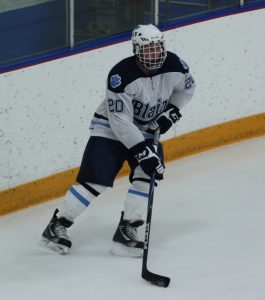
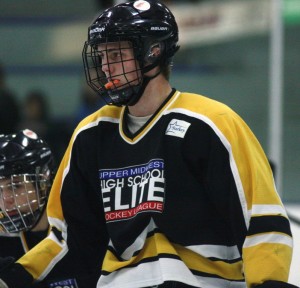
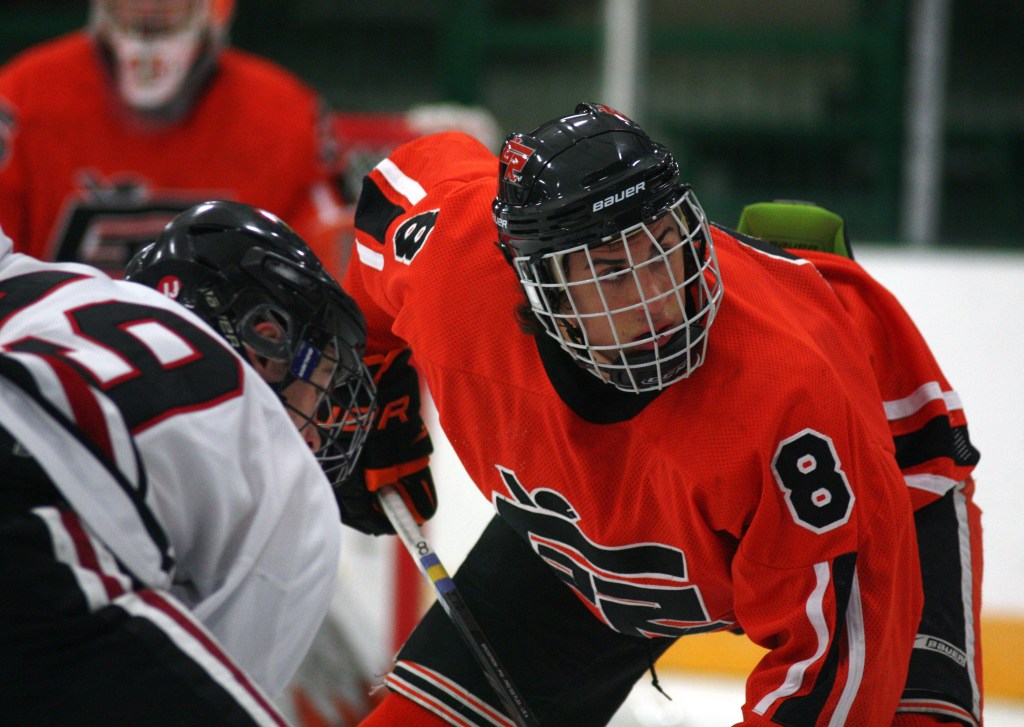
The NHL playoffs may be nearing their close, but the hockey season never really ends. For top-end Minnesota high school players, this means the junior league camps are just around the corner. The players will have to decide if they want to forgo the remainder of their high school careers for hockey opportunities in other cities. Some will do so to get out of, say, a bad relationship with a coach, but most will do so in pursuit of better “development” as a player. The better junior leagues have longer seasons and older players, which offer increased competition and challenges that may not be available in high school.

The number of players choosing different development models shot up dramatically in the late 90s, and though it has since leveled off somewhat, the hockey scene will never be the same. Across the Twin Cities, a proliferation of summer hockey programs has given rise to several that have moved into the winter season and now, whether directly or indirectly, antagonize the Minnesota hockey model. (While the pre-high school, community-based youth associations technically have nothing to do with high schools, the two work in such concert that I will conflate them in this piece.) The new programs attempt to group together elite players on teams that play schedules that are far more intense than anything allowed by the powers that be—whose responses to such challenges, as one might expect out of a many-layered bureaucracy, have often been rather slow and lurching. Canadian Major Junior leagues now eye young American players with relish, and there is something of a silent war going on between the Canadians and the proponents of high school and U.S. college hockey. (Playing Canadian Major Juniors leaves players ineligible for the NCAA.) The Alec Baer incident this past winter was probably only the opening round in an impending battle of development models.

Putting myself in the shoes of a hockey parent, I understand the shift. If I someday have a kid who loves hockey, I doubt I’d hesitate to give him or her the best development opportunities my money can buy, and I wouldn’t hold an ambitious kid back from heading off to another league if it were a good fit. Sure, I love the high school game more than any other level, and in my perfect world, no kid would ever leave. But perfect worlds aren’t necessarily good guides for what to do in the real one, and I also can look at this game from a far enough distance that I have no desire to sacrifice the goals of others to the altar of community-based hockey.

Still, two issues leave me with some reservations.

The first comes from Herb Brooks, the Minnesota hockey legend and coach of the U.S. national team that won the gold medal in the 1980 Miracle on Ice. Brooks envisioned hockey development as a pyramid, with a broad base of community-centered hockey propping up the top players. By its nature, this model is somewhat inefficient; it doesn’t allow the top players group together to maximize their development. But it also recognizes that culture matters, and that the long-term health of hockey in Minnesota requires attention to the things that make hockey more than a game. It is near-impossible to measure the value created by the bonds of community loyalty and the mystique of the ever-so-Minnesotan high school tournament, but it certainly exists, and I sincerely doubt the dream of playing for a team in Alberta or the 2004 Birth Year Team Minnesota Wolfpack Sponsored by Car Dealer X would be able to match the pull of playing for Edina or Roseau or Hill-Murray High. The reason football is so embedded in the American psyche is because its sole development model touches just about everyone who goes through a traditional American high school; kids who have minimal interest in the game still show up on Friday nights to join their friends in a rite that venerates the players but also lets each and every fan participate, an experience passed forward through schools and families and generations. The same is true for Minnesota hockey in many communities, and losing that cultural cachet in the interest of efficient development would be a real loss.

This is especially true for a sport that, due to high equipment and ice rental costs, has largely come to be the province of the wealthy. Hockey has big enough image issues as it is. In this day in age we like to pretend that any choices we make that are “best for our kids” don’t have any consequences beyond said kids. They do. People who act according to strict self-interest are naïve if they think others will not judge them for abandoning a community or having different priorities. I’m not saying it is right for those considering leaving to abandon their aspirations under communal pressure, but if they do not understand where the community is coming from, conflict will ensue. Culture matters.

The second issue has to do with the very notion of “development” itself. Many critics have wondered whether young hockey players are mature enough to leave home early, or whether the rigors of an intense training regimen will lead to burnout or injury. These are real concerns that have affected some players who seek different development paths, though they can be mitigated in various ways. Still, my questions are a bit more profound. We can justify just about anything claiming that it leads to better development, but development is such an abstract term that any serious contemplation of what it means requires some distance. Sure, more ice time will almost certainly make a player better, but we have a very limited grasp on the degrees to which it can help. At what point do we hit the point of diminishing returns, and can a different path fundamentally change the trajectory of careers that are also dependent on genetics and work ethics and other issues that pop up in life? Advocates of models have lots of anecdotes and select statistics they like to throw around, and plenty of them do make intuitive sense. But until someone can put together a study with a huge sample size that takes players and compares their career trajectories and isolates as many variables as is humanly possible, we are all groping around in the dark.

I can go even further on the development front. Does the arms race for better hockey development have an ending point, or will it simply go on until the end of time, with more and more opportunities that are less and less accessible to most anyone? On an even more existential level, is youth hockey always a means to an end, or is there more to it? Is childhood a constant progression from one step to the next, or does thinking of hockey players as crops to be grown and harvested somehow impoverish our understanding of them—and if so, in what ways?

I don’t pose any of these questions with the hope that they will lead anyone to have a sudden change of heart. I just hope people might consider them with as much objectivity as possible, instead of running away from them because they are too deep and complicated, or trying to cram knee-jerk responses into a preexisting worldview. Our inability to be completely objective is no excuse for not trying.

For the Minnesota kids who do choose to leave this offseason, I’ll be rooting for all of you. But I do have one simple request: remember where you came from. Even if you bounced around for a bit or didn’t quite fall in love with your particular program the way some people do, it is a part of you. If you love hockey, you are in some way indebted to the many people who keep it going at each and every level.

Take the example of Zack Fitzgerald—a player who is not from Duluth (his family moved there when his older brother, a future NHLer, was in high school), and left Duluth East High for Canadian Major Juniors after his freshman year. He has had a successful career as an enforcer in the American Hockey League, one step below the NHL, and got into one game in the big show. Yet he spent his formative years in Duluth, and this summer will find him back home, running a hockey camp along with his older brother. There are countless ways to help, whether through volunteer work or philanthropy; God knows schools (both public and private) need all financial the help they can get. I’d also advise donors to look beyond one’s alma mater, as means allow; for example, the need for support at Duluth East, while real, is far less pressing than it is for the dwindling program of their crosstown rivals, Duluth Denfeld. Sustaining the hockey culture in Minnesota requires a broader perspective, and programs that get financially disadvantaged kids on skates can help in ways that go far beyond the rink. So long as the base of the pyramid remains solid, I am at peace with players pursuing their hockey careers in any way they see fit. And if that base isn’t solid, before long it won’t much matter which paths players take.


For more from Karl visit A Patient Cycle

Share

Category: Prospects

J. Jackson-Jake Jackson of Tartan High School, Drafted in the 1st round, 12th overall by Sioux City. (Picture by David Romuald)

Minnesota Products drafted in Phase Two of the USHL Draft

Pick Team Player 2012-13 Team
1/12 Sioux City Jake Jackson -F Tartan HS
2/17 Muskegon C.J. Smith -F Austin-NAHL
2/21 Chicago Mason Bergh -F Eden Prairie HS
3/38 Omaha Steven Johnson –D Aberdeen-NAHL
3/43 Fargo Cole Bjugson-D Roseau HS
4/47 Tri-City Jalen Schulz-D Corpus Cristi-NAHL
4/48 Des Moines Nick Wolff-D Eagan HS
4/52 Omaha Sam Wolfe-D Bismark-NAHL
6/65 Cedar Rapids Alex Funk-F Rochester Lourdes HS
6/72 Tri-City Brock Kautz-G Janesville-NAHL
6/81 Chicago Zach Lavalle-F Hill-Murray HS
6/87 Waterloo Hayden Shaw-D Woodbury HS
6/89 Lincoln Thomas Carey-F Moorhead HS
7/99 Waterloo Peter Krieger-F Aberdeen-NAHL
7/103 Fargo Spencer Naas-F Benilde St Margaret’s HS
8/109 Sioux City Will Borgen-D Moorhead HS
8/115 Green Bay Koby Bender-F Cloquet HS
8/117 Waterloo T.J. Moore-F Benilde St. Margaret’s
9/124 Sioux City Zach Hartley-F Chicago Mission
9/125 Cedar Rapids Seamus Donohue-D St. Thomas Academy
9/133 Fargo Alex Toscano-F Duluth East HS
9/134 Sioux Falls Louis Nanne-F Penticton-BCJHL
10/136 Indiana Chris Forney-D Their River Falls HS
10/148 Fargo Andy Jordahl-F Edina HS
11/158 Muskegon Sean Lang-D Apple Valley HS
12/175 Green Bay Alex Stevens-D Wayzata HS
12/176 Lincoln Eric Brenk-F Brookings-NAHL
12/178 Fargo Colton Poolman-D East Grand Forks HS
14/196 Indiana Vaughn Ahrens-G Wayzata HS
14/206 Lincoln Jacob Dittmer-G Moorhead HS
15/215 Cedar Rapids David Brumm-F Maple Grove HS
15/221 Lincoln Miguel Fidler-F Edina HS
15/224 Sioux Falls Jake O’Borsky-F Minot-NAHL
16/240 Dubuque Blake Hillman-D Elk River HS
17/244 Sioux City Jack Murphy-F Prior Lake HS
17/250 Green Bay Hunter Miska-G US Under-18
17/252 Waterloo Jack McNeely-D Lakeville North HS
18/260 Cedar Rapids Johnny Panvica-F Bloomington Jefferson HS
18/261 Chicago Chase Jungels-F Benilde St. Margaret’s
18/262 Omaha Zach Glienke-F Eagan HS
18/268 Fargo Connor Kelly-F Chicago Fury
19/284 Sioux Falls Jay Dickman-D Austin-NAHL
20/288 Des Moines Joey Anderson-F Hill-Murray HS
20/299 Sioux Falls Willie Brown-F Hill-Murray HS
21/301 Indiana Mitch Slattery-F Hill-Murray HS
21/302 Tri-City Will Garin-F Holy Family HS
21/308 Muskegon Kevin Dineen-F Shattuck U-16
22/319 Sioux City Jake Jaremko-F Elk River HS
22/329 Sioux Falls Jack Becker-F Mahtomedi HS
23/335 Cedar Rapids Mario Bianchi-F Holy Angels HS
23/342 Waterloo Lawrence Jungwirth-F Shattuck U-16
24/250 Cedar Rapids T.J. Roo-F Totino-Grace HS
24/357 Waterloo Darian Romanko-F Mounds HS
24/358 Fargo Matt Serratore-F Bemidji HS
25/362 Tri City Derek Lodermeier-F Totino-Grace HS
25/372 Waterloo Brandon Notermann-F Blaine HS
25/374 Fargo Tony Ulgum-F Moorhead HS
26/381 Chicago Brian LeBlanc-D Witchita-NAHL
26/386 Lincoln Grant Loven-F East Grand Forks
27/395 Cedar Rapids Charlie Curti-F Mound HS
27/404 Sioux Falls Christian Horn-F Univesity of MN
28/411 Chicago Jack Jablonski-F Benilde St. Margaret’s
31/461 Lincoln Nate Repensky-D Bismark-NAHL
Share

Category: Prospects, USHL

Brock Boeser

Brock Boeser Photo by David Romuald

There were 23 Minnesotans taken during Phase One of the USHL Draft on Monday night. Phase One of the Draft is eight rounds of “Futures” age players only, which are U-17 players for next year’s season. (1997 birth year players only for the 2013 Draft).

Burnsville’s Brock Boeser was the first Minnesota born player to be picked, selected fourth overall by Sioux City. Boeser is a very intense player that possesses great size and skill to match. The sophomore forward was a huge part of Burnsville’s offense last season, scoring 12 goals and adding 22 assists in 19 games. The sky is the limit for Boeser, as his skating and hands have improved a great deal throughout the year.

Two years ago Waterloo selected a small, skilled forward out of Shattuck St. Mary’s first overall. That player, Taylor Cammarata, went on to score 183 points in 139 games for Waterloo. This season the Black Hawks tried to repeat history by taking another small but skilled forward out of Shattuck in the first round, Rem Pitlick. As always Waterloo was busy drafting Minnesotans, selecting four from the State of Hockey during Phase One of the draft.

St. Thomas Academy had three players selected (Tom Novak, Christiano Versich, and Peter Tufto). Novak, a native of Wisconsin was the first player selected but is listed as third overall due to Indiana and Des Moines using tenders instead of selecting one and two respectively.

Pick Team Player Position
1/4 Sioux City Brock Boeser F
1/12 Waterloo Rem Pitlick F
2/2 Tri-City Matthew Freytag F
2/8 Des Moines Tanner Tweten F
2/11 Lincoln Tye Ausmus D
2/14 Sioux Falls John Schuldt D
3/11 Lincoln Jared Bethune F
4/7 Omaha Zach Driscoll G
4/9 Sioux City Max Zimmer F
4/11 Lincoln Tyler Jutting D
4/14 Sioux City Nick Heid D
5/6 Chicago Nolan Schaeffer D
5/12 Waterloo Ben Newhouse D
6/4 Sioux City Ryan Zuhlsdorf D
6/12 Waterloo Collin Saccoman D
6/14 Sioux Falls Jordan Klehr D
7/2 Tri-City Jason Krych D
7/3 Des Moines Colin Gallagher D
7/6 Chicago Christiano Versich F
7/13 Fargo Zach Sitarz F
8/5 Cedar Rapids Jack Ahcan D
8/10 Green Bay Peter Tufto F
8/12 Waterloo Keith Muehlbauer D

Complete draft results

Share

Category: Prospects, USHL

Ryan Lindgren- Shattuck

Photo by David Romuald

Shattuck St. Mary’s Ryan Lindgren has made a verbal commitment to play his college hockey at the University of Minnesota. The skilled defenseman is widely considered the top 1998 born prospect from Minnesota as he has demonstrated to be a great skater that possesses elite puck control and fantastic hockey awareness. During many viewings this season Lindgren proved to be the best player on the ice, showing aspirations of being a first round selection in the 2016 NHL Draft. Of course there is a great deal of time between now and then but Lindgren has the talent for first round consideration this early in his development. Lindgren had a fabulous season on Shattuck’s bantam team, scoring 24 goals and adding 64 assists in 55 games. It’s speculated that Lindgren could be in the maroon and gold as early as the fall of 2016.

Share


Twitter MNPROSPECTS Fans

has followers

Y_CollegeHockeyChrisLocker19BriannaghDInsideHockeyHRBriggsNationrem_dawg33chietala33CapitulateBjork20ElCasaGrandepuhockeySdockry19jrw777_justinbrummtransportKBustromPeteNelson999MWGL13DrewBecker879Faulky16SconiSchneiderNickSwaney5babybrown87kjanczereedjohnmillerDostalTony
Follow me
Powered by Tweet Lovers